There are seven actions in Aegeapolis. On your turn you take exactly one of them; then it is the next player’s turn.
At any time you may also make transactions with the active player: exchanging coins, Fleet Points (FP), Army Points (AP), Mission Cards, or non-binding promises. Transactions do not count as your action. Corinth also has an eighth action: Recruit Builder.
The photos show an earlier prototype. Some tile values and card texts have changed since then.
Action One · Discover
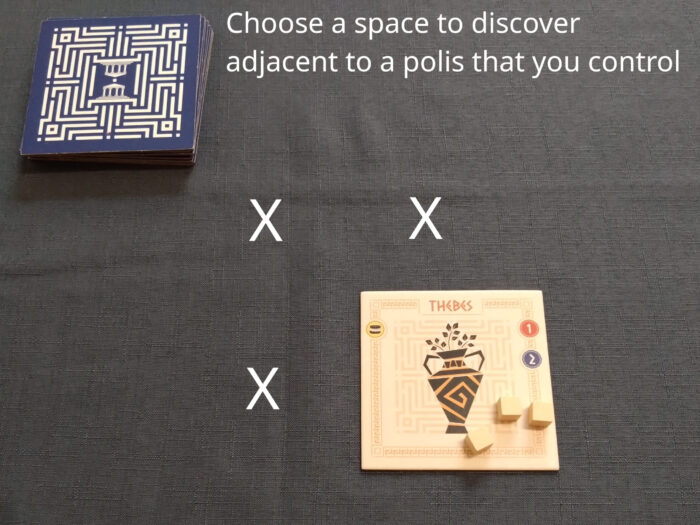
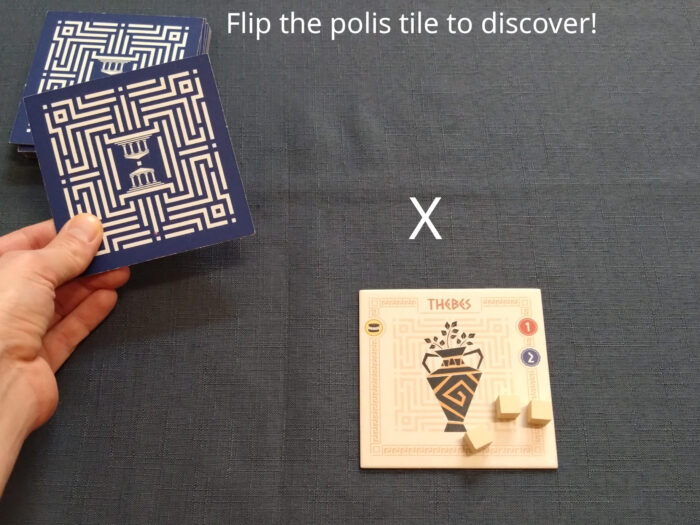
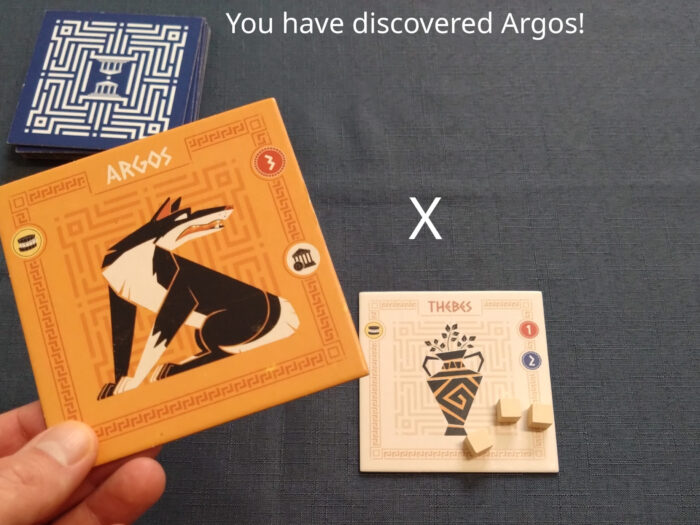
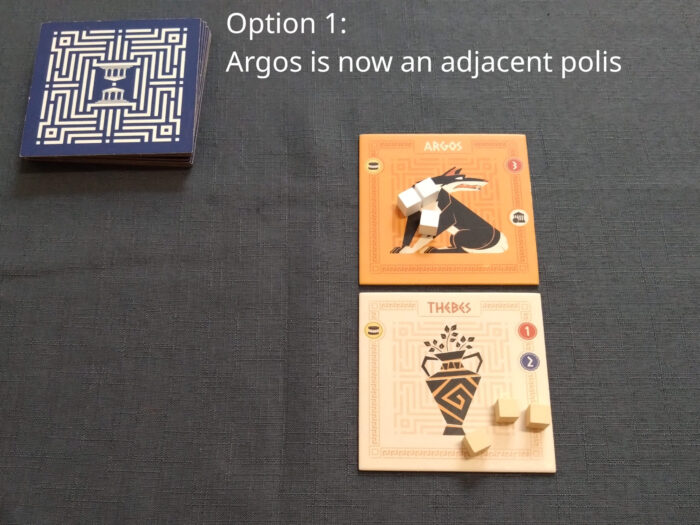
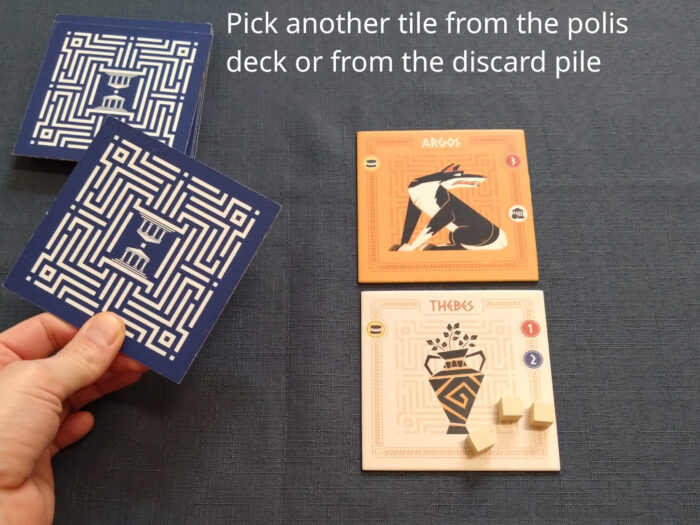
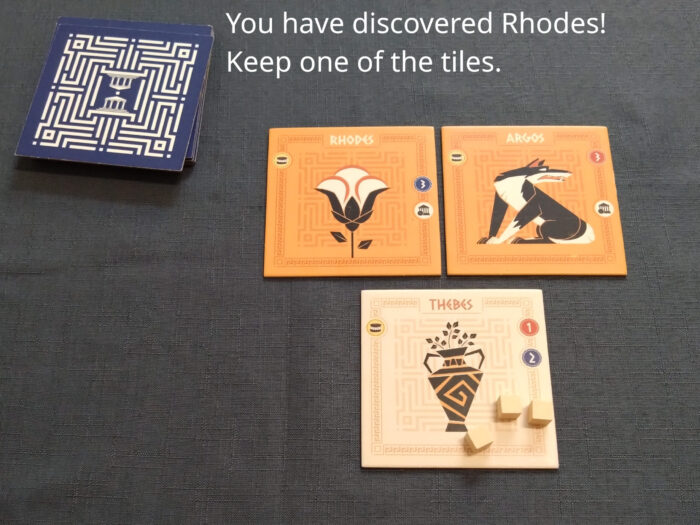
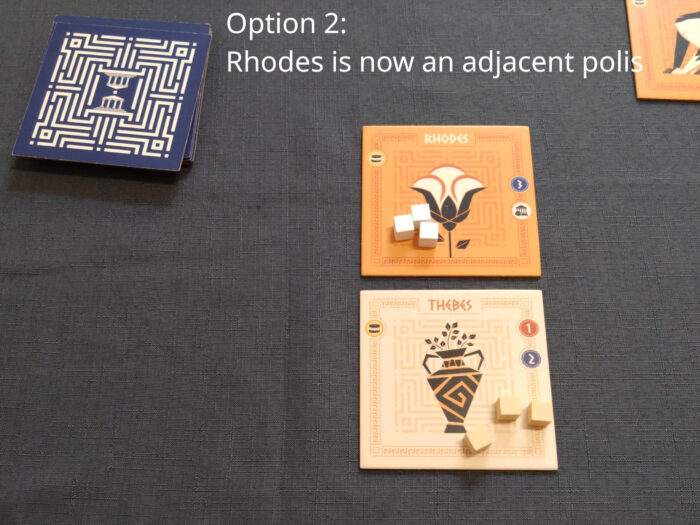
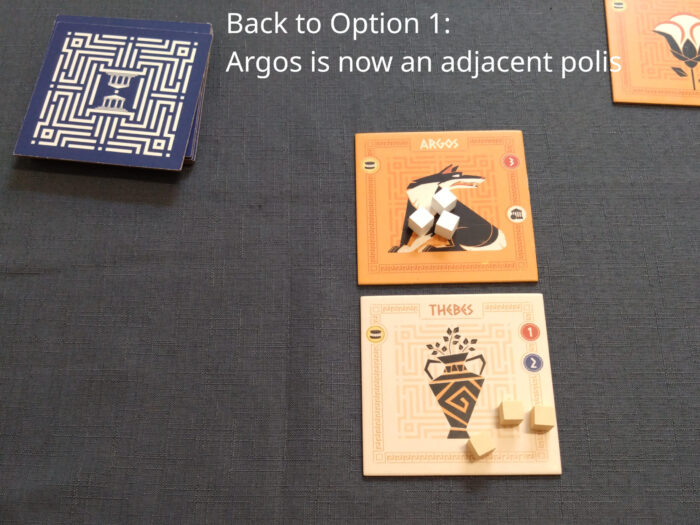
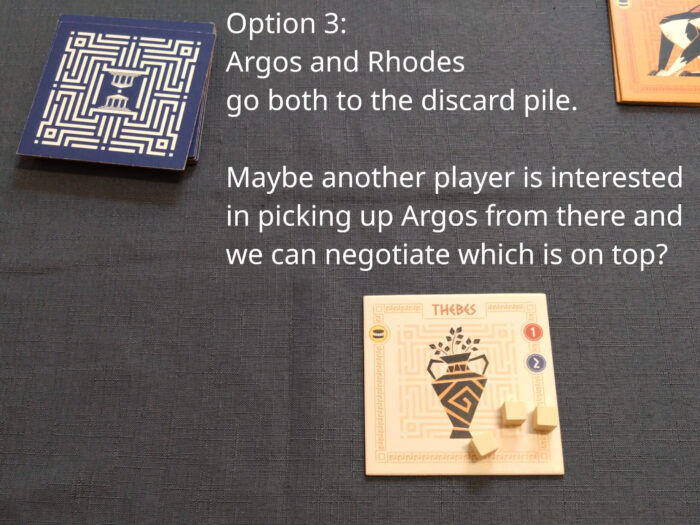
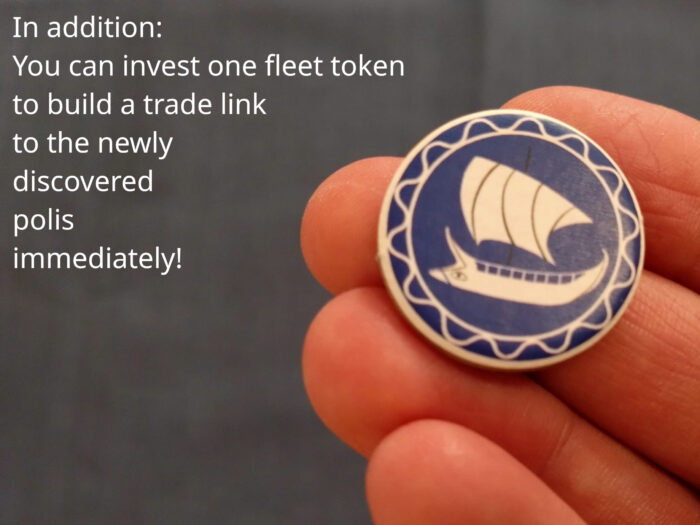
Discover is the bread and butter — your core action at the start of the game. Choose an empty space next to a Polis you control. Draw a Polis tile from the Polis deck, or take the top tile of the discard pile, and place it there. For 1 FP each, you may also draw a second tile for the same space and keep one of them, build a trade link to the new Polis, or both.
Action Two · Build Trade Link
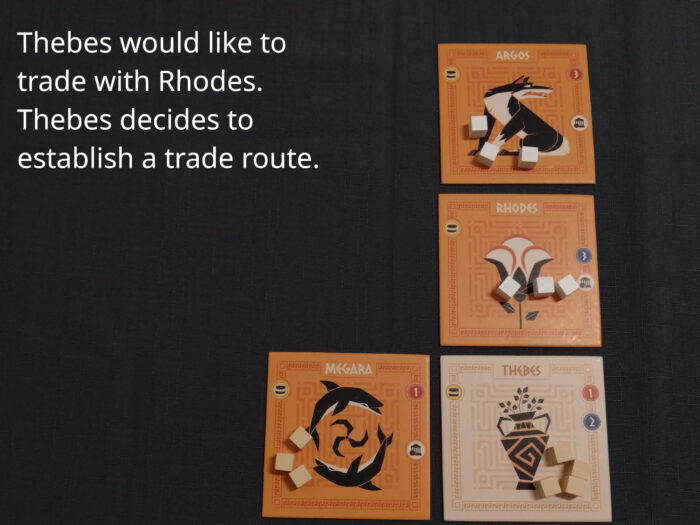
A trade link is a bridge between two neighboring Poleis. You need trade links to trade. The first link in the action is free; a second one costs 1 FP. Trade links can never be destroyed.
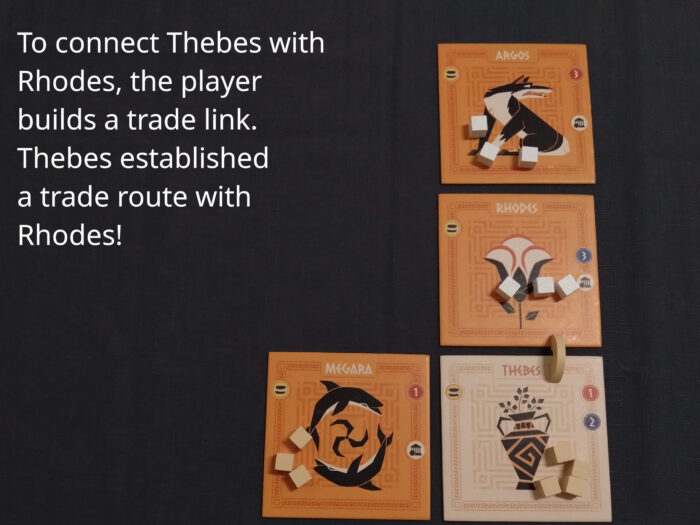
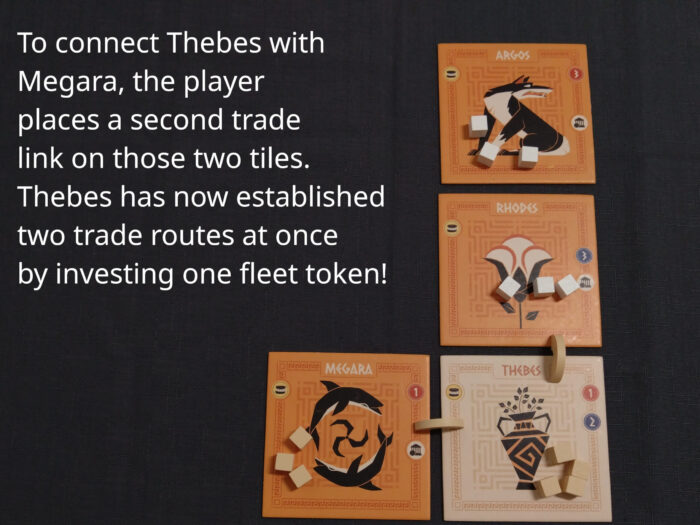
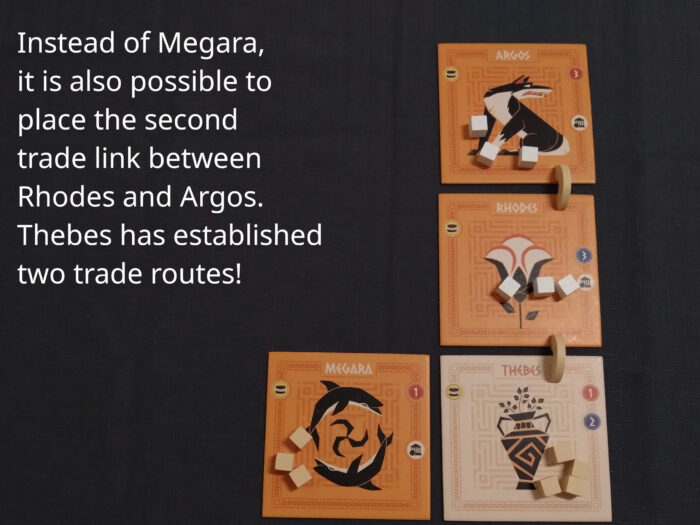
Action Three · Trade
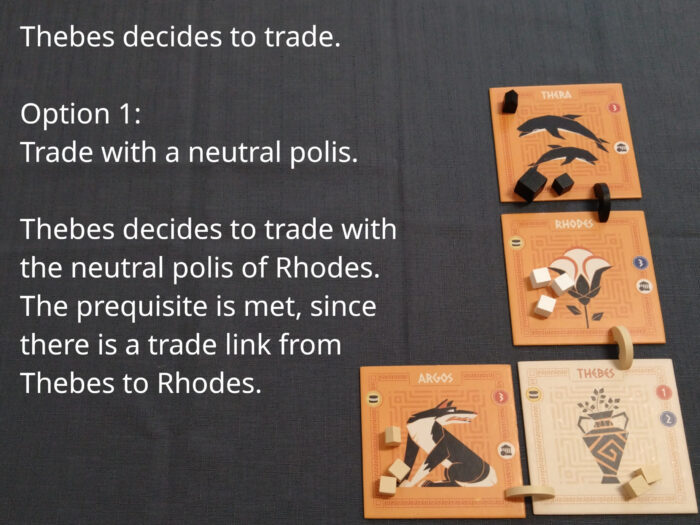
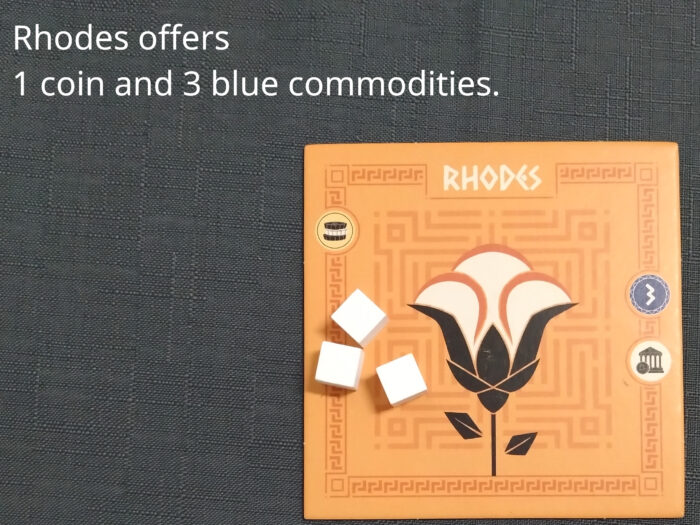
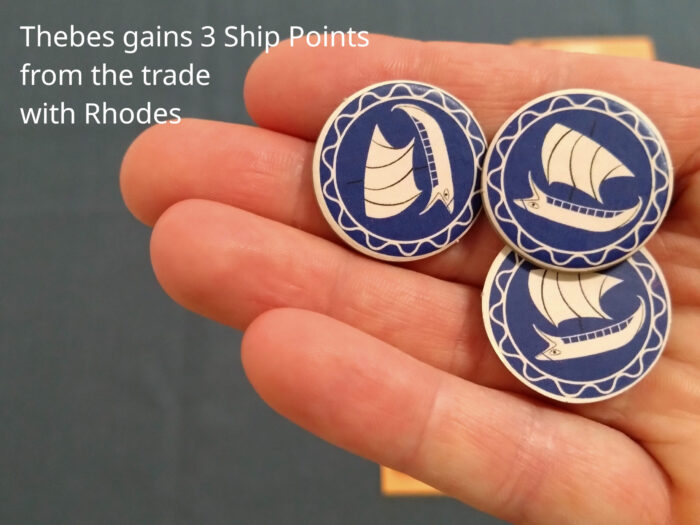
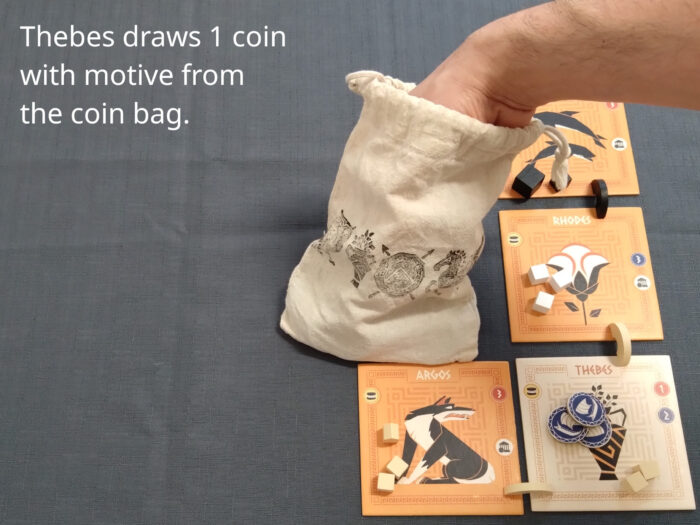
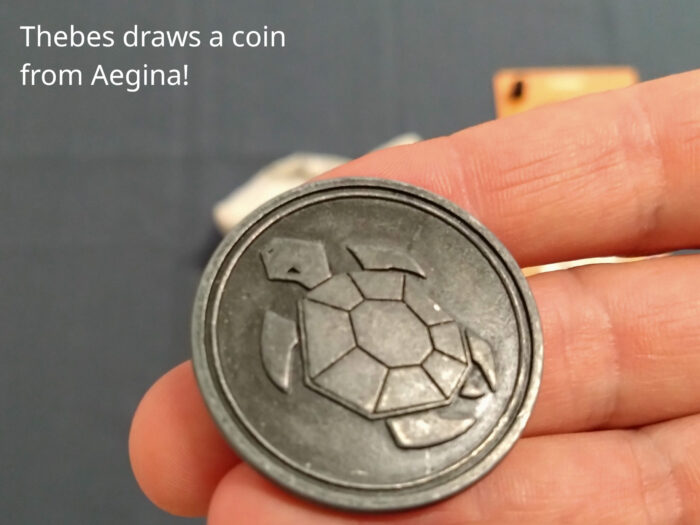
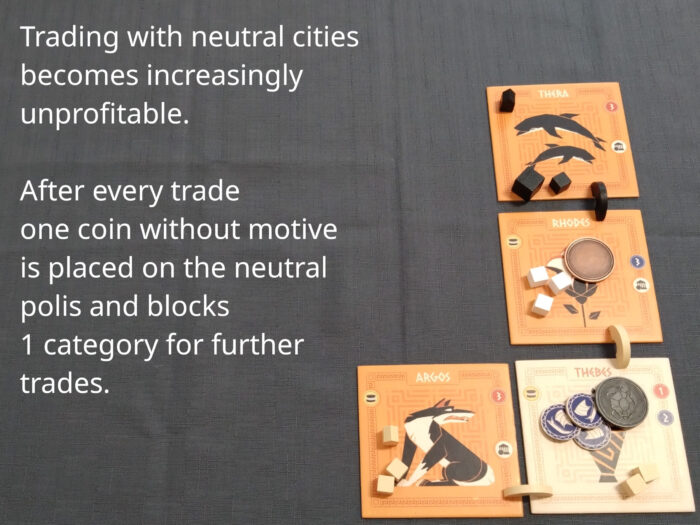
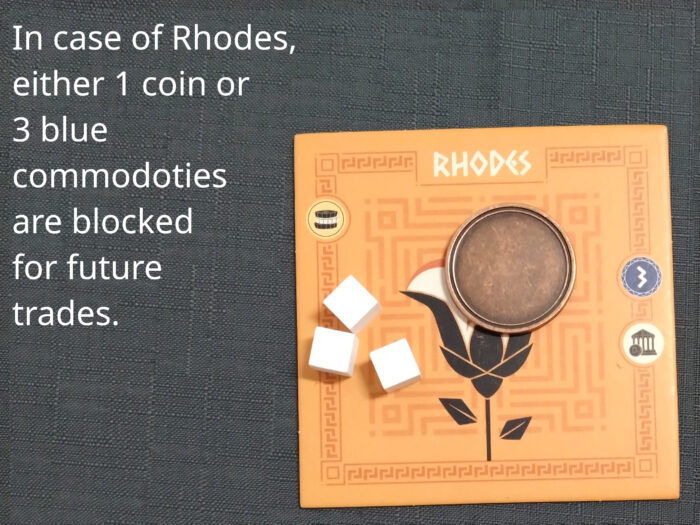
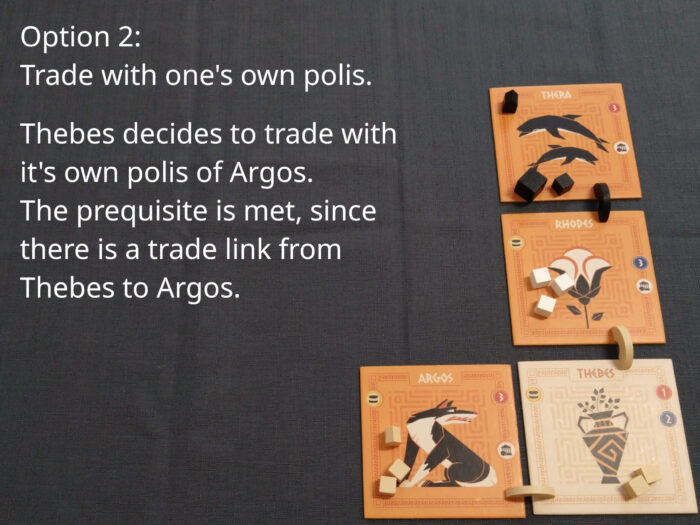
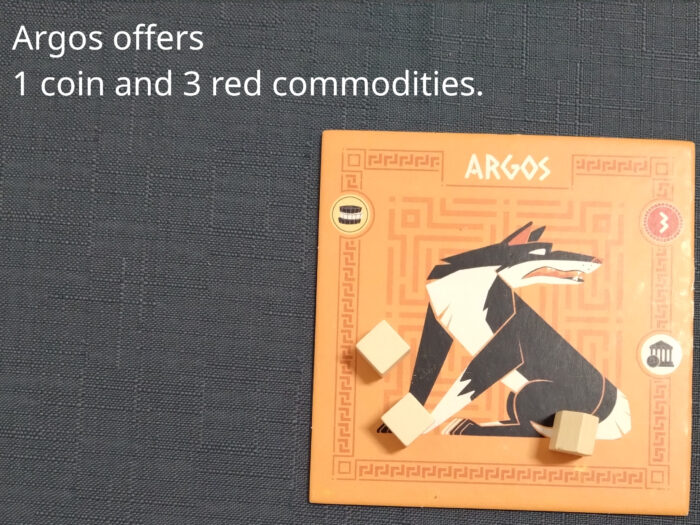
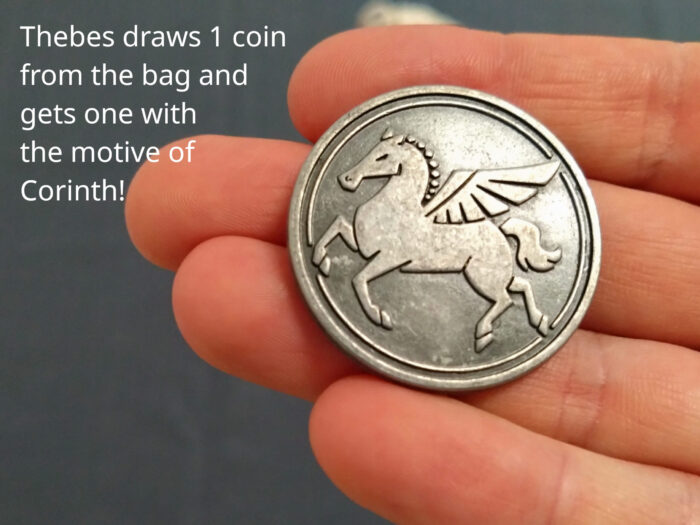
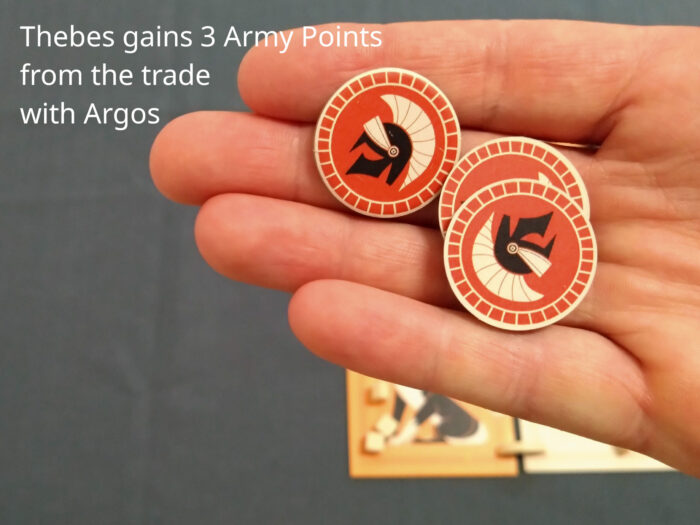
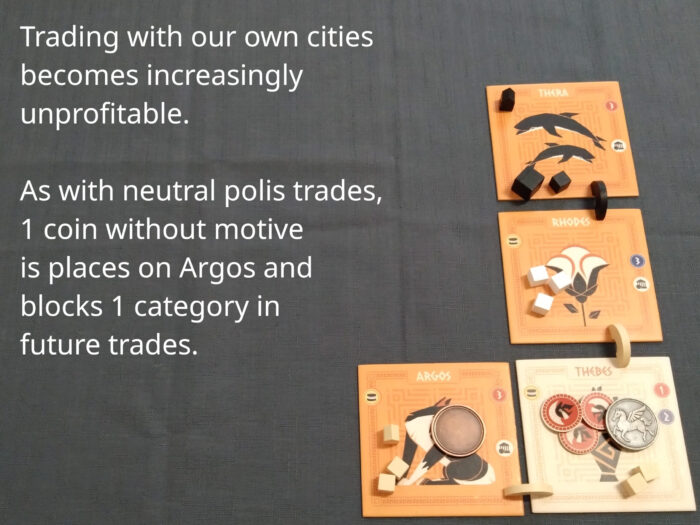
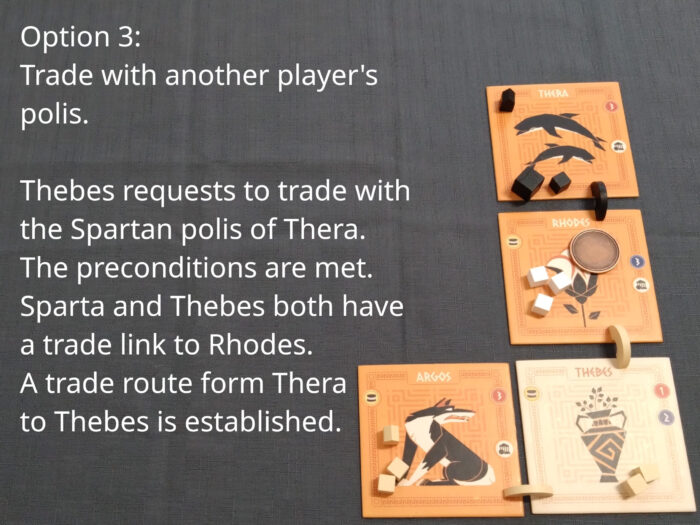
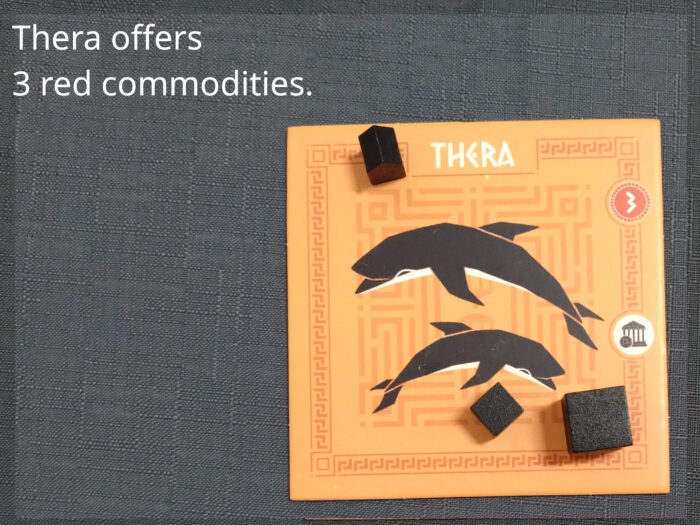
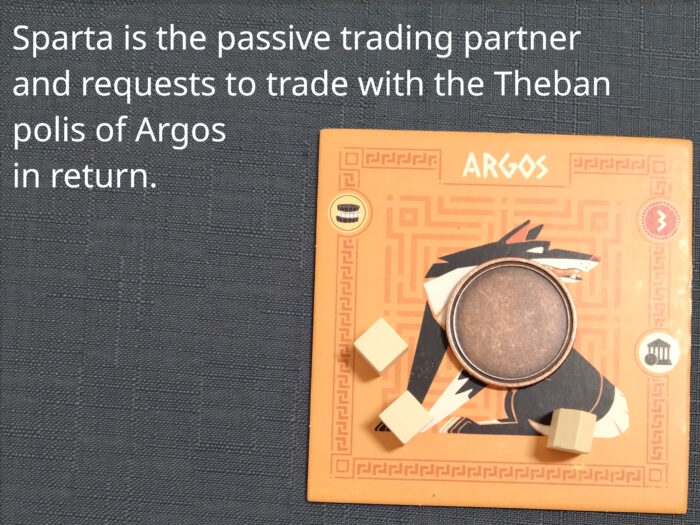
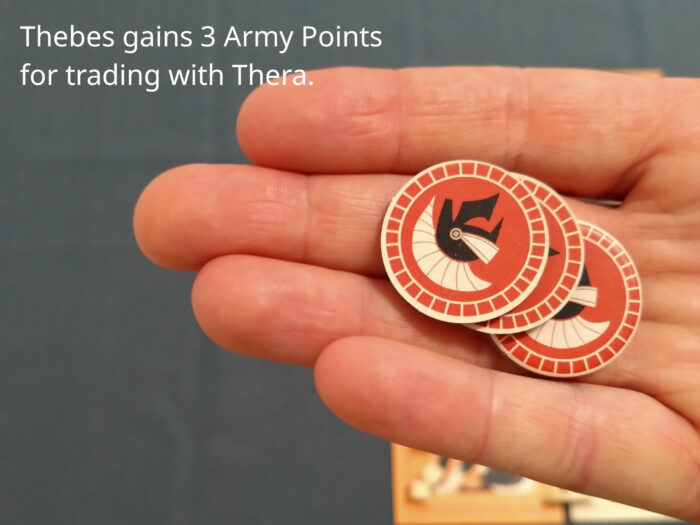
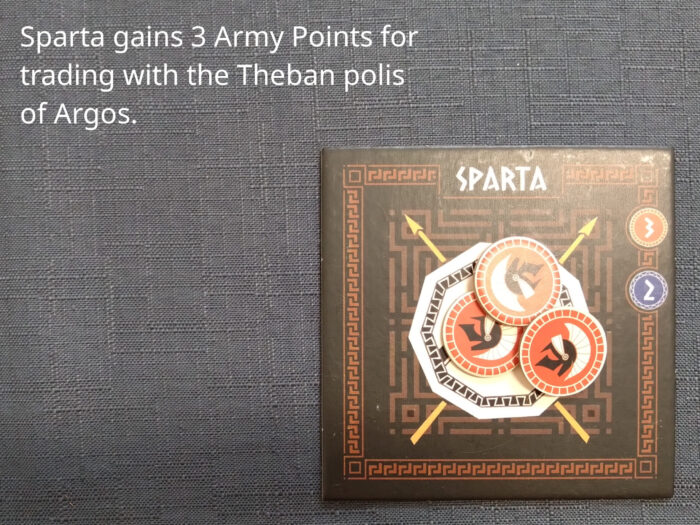
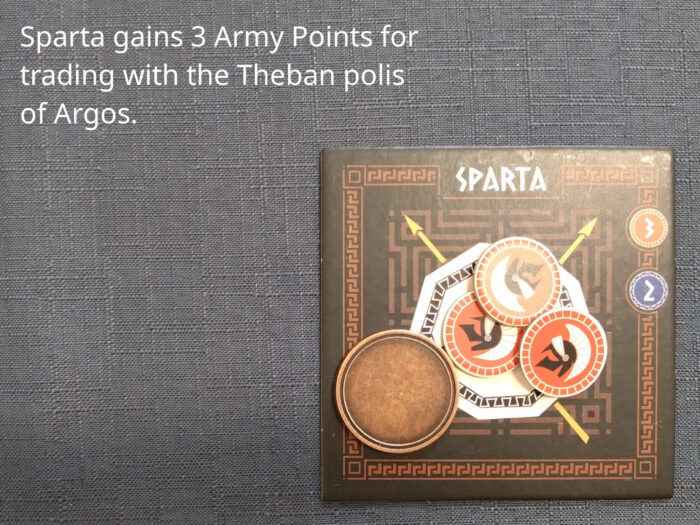
A trade always takes place between two Poleis that are connected by a trade route. You can trade with a neutral Polis, with one of your own Poleis, or with another player. One action is one trade with one target Polis. Exchanging resources outside this action is not a trade but a transaction.
Action Four · Recruit
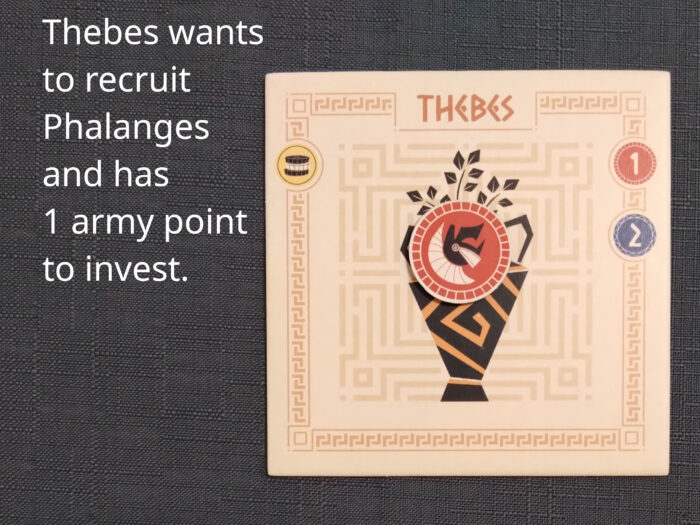
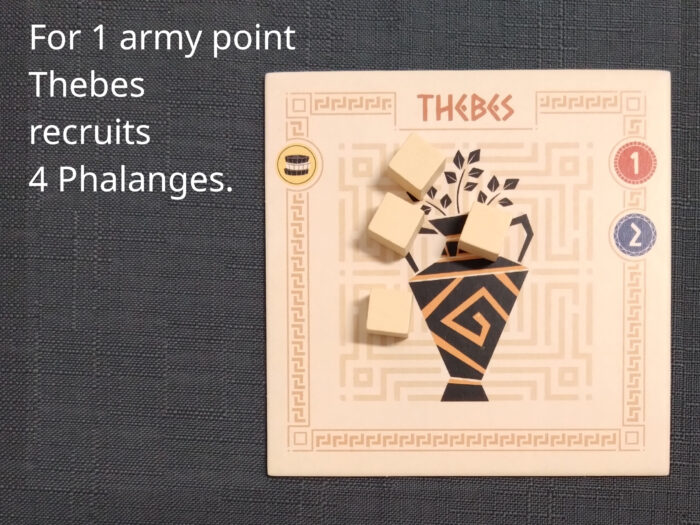
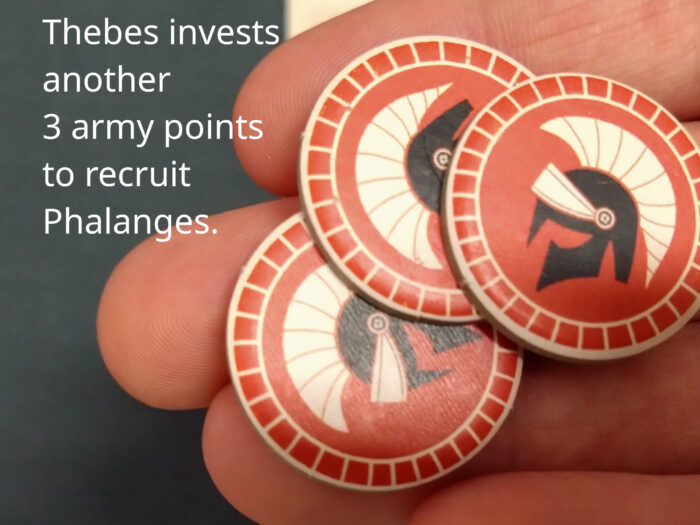
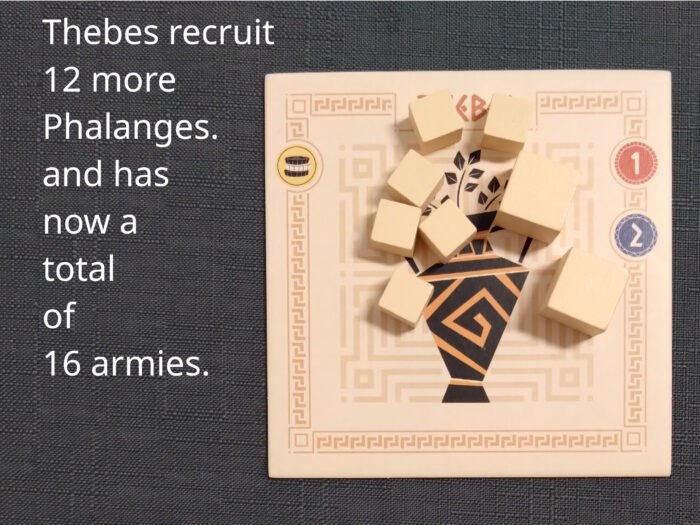
Spend Army Points (AP) to recruit Phalanxes in your Native Polis: 1 AP gives 4 Phalanxes.
Action Five · Move & Combat
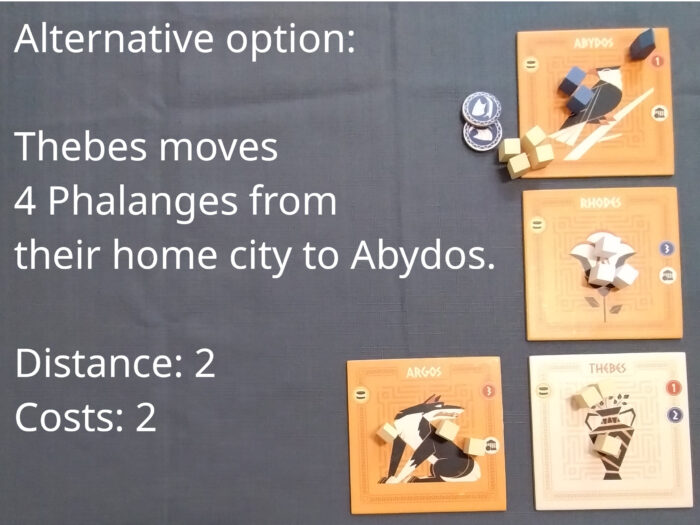
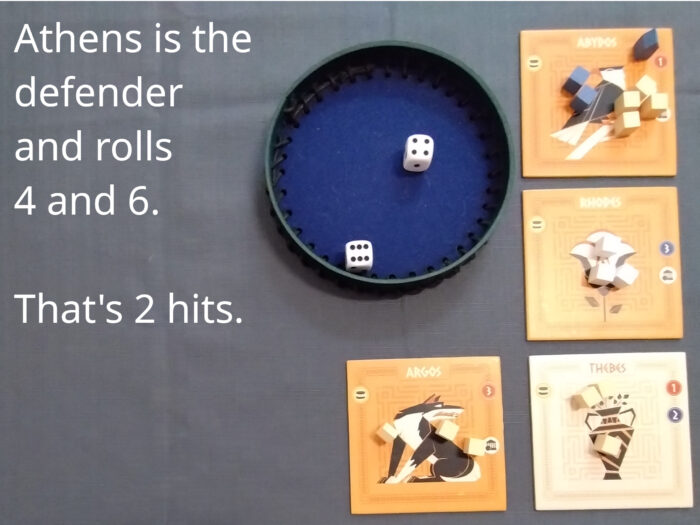
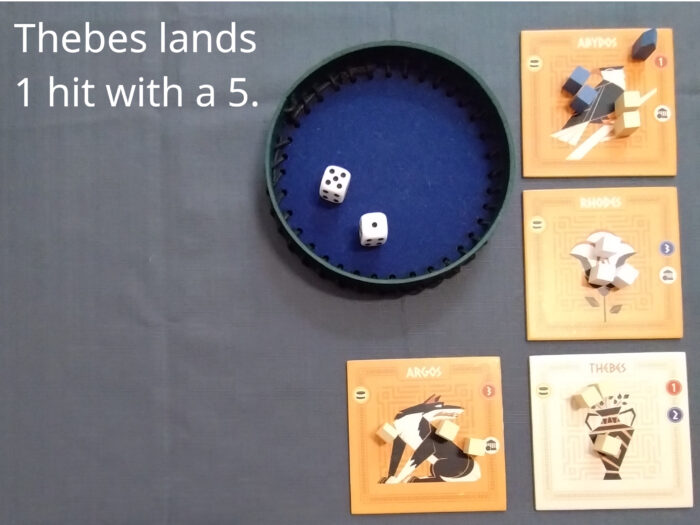
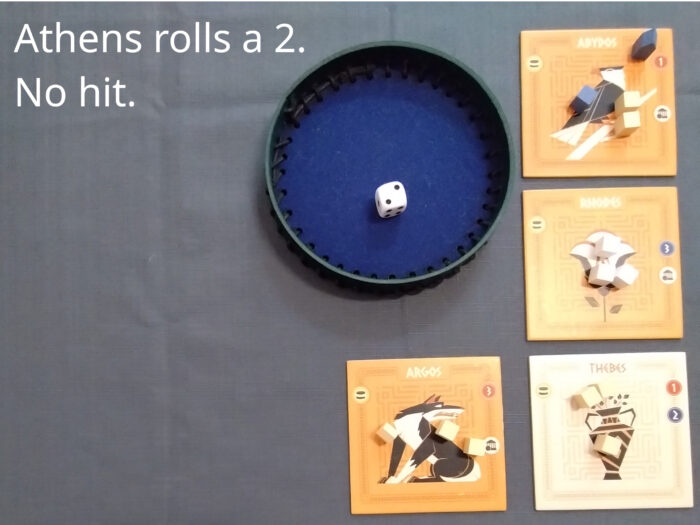
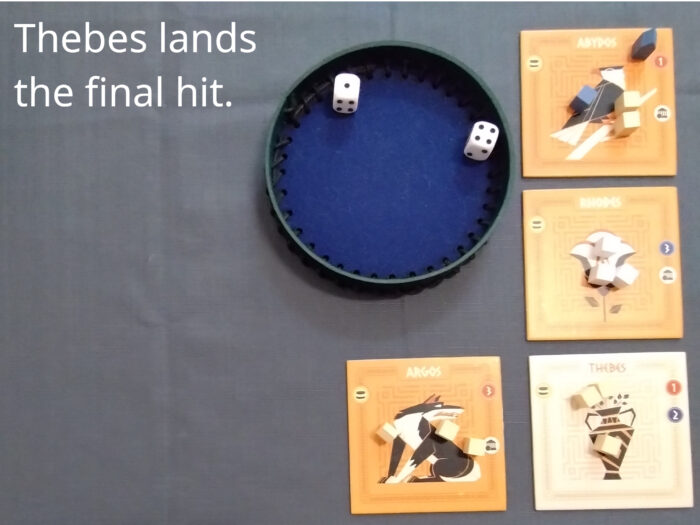
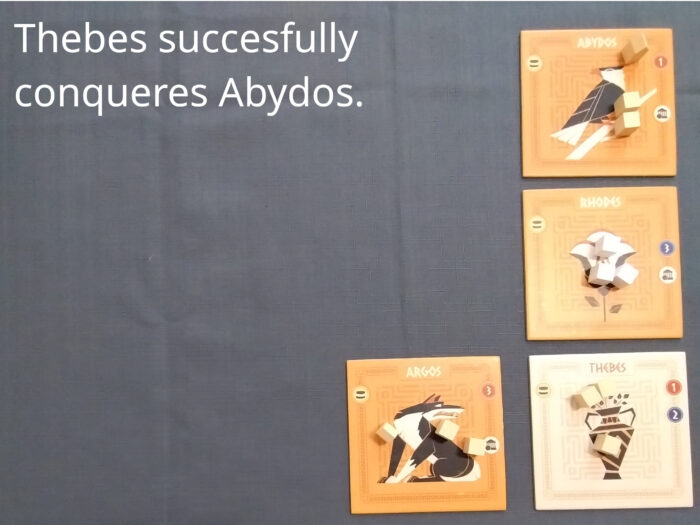
Spend Fleet Points (FP) to move Phalanxes out of one Polis to up to three destinations. Cost: moving Phalanxes ÷ 4, rounded up, × the distance to the farthest destination. If a destination is not yours, combat follows.
Action Six · Mission
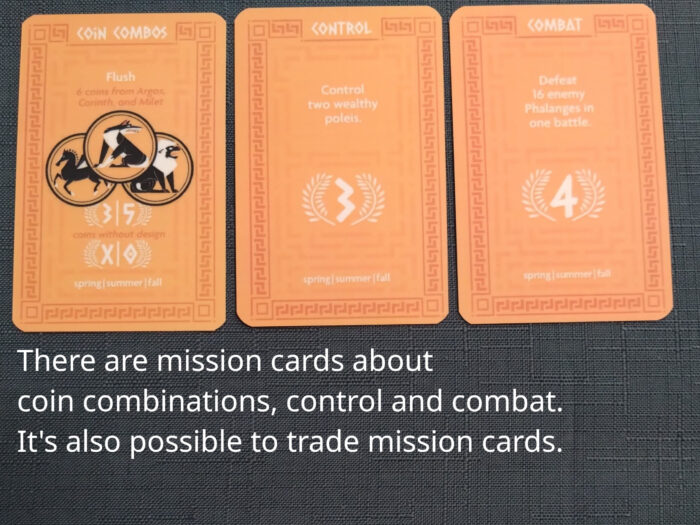
Draw one Mission Card. Its victory points count only when you reveal it — until then, you can also offer it in transactions.
Action Seven · Change Government
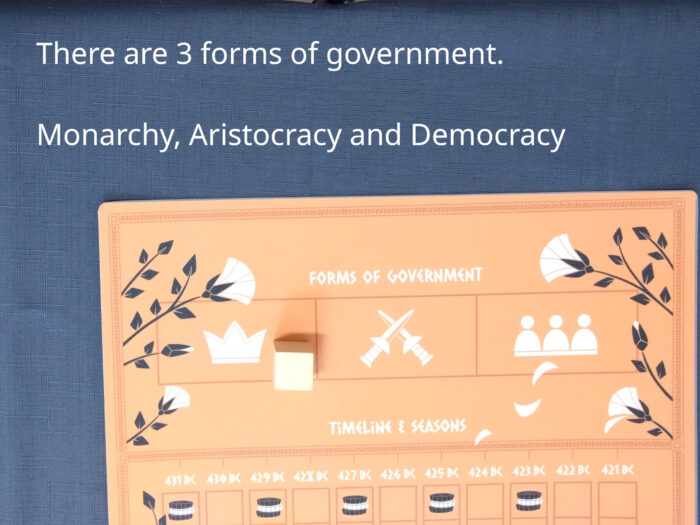
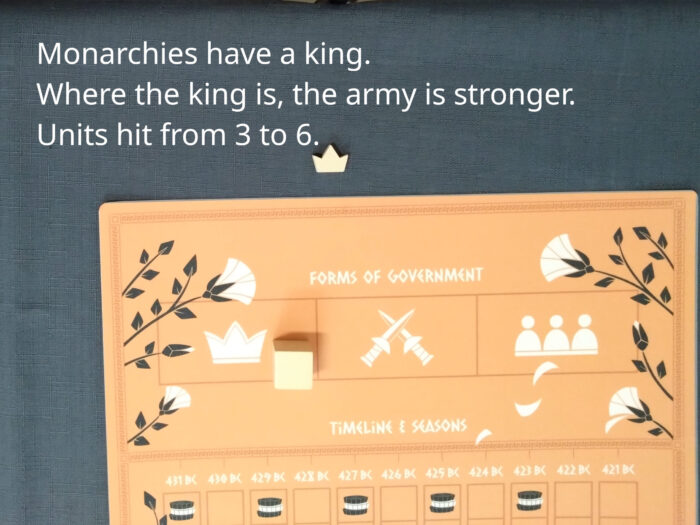
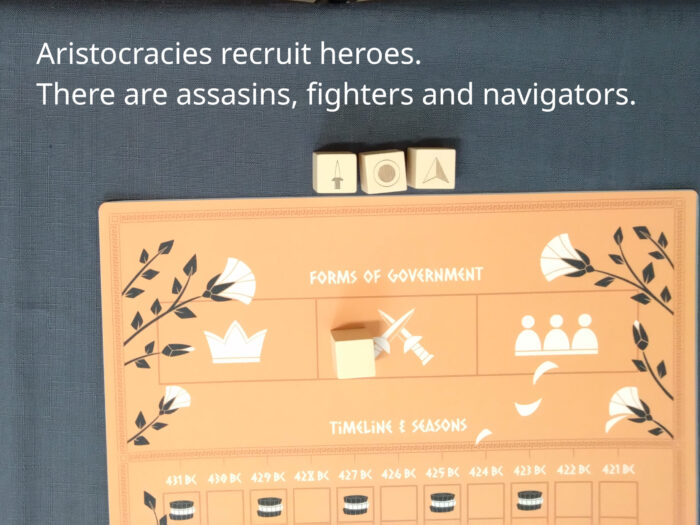
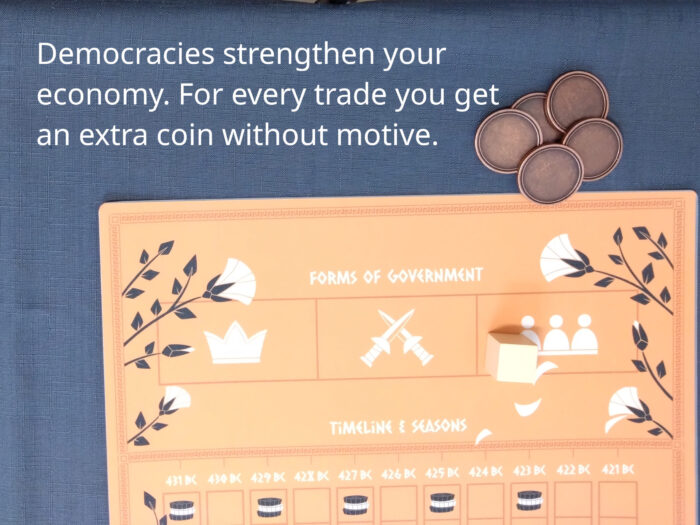
Switch to another form of government: Monarchy, Aristocracy, or Democracy.