
Four great powers — choose your polis

Athens
Speed and expansion through the Delian League.
Sparta
The phalanx that holds longest. When losses mount, Spartan dice replace yours.
Corinth
Trade routes and forts that grow stone by stone.

Thebes
Patient planning. One decisive blow when the moment comes.
You’re in Classical Greece, 431 BC.
Four great powers are struggling for dominance.
Built for table-talk, alliances, and the long game.
Coming to Gamefound on Tuesday, 2 March 2027.
What is Aegeapolis?
‘Aegea’ comes from the Aegean Sea. The Aegean Sea lies between the Greek mainland and Turkey.
‘Polis’ is the ancient Greek term for city. It also refers to the ancient, autonomous city-states located on the islands of the Aegean Sea.
Aegeapolis features these ancient Greek city-states in and around the Aegean Sea.
The time period that Aegeapolis focuses on is the fifth century BC, also known as Classical Greece.
Setting and play
Aegeapolis is played on a 5 x 5 tile grid. Each tile features a polis (city state).
Aegeapolis is a game of trade and commerce. Players establish trade routes and bargain and negotiate deals.
It is a game that focuses on player interaction, swift movement, and seizing opportunities. First, explore the world to find neutral city-states to trade with.
Aegeapolis is also a game of power projection and influence. Expand your influence and conquer neutral cities. Establish borders with the other great powers. Form alliances and press your claim where it counts.
How to play
You play as one of the four great powers:
Athens, Sparta, Corinth, or Thebes.
There are three resources in Aegeapolis.
- you need fleet tokens to move your armies.
- you need army tokens to muster armies.
- you need drachmae to score victory.
You score victory points:
- by investing in drachmae
- by controlling city states
- by completing objectives tied to drachma sets or city-state control.
Do you want to learn more?
The coins
The economy is built around real ancient coins from eight historic mints — among them the Pegasus of Corinth, the turtle of Aegina. Spent, traded, scored — not generic chips.
Two modes, one box
Aegeapolis is one box with two distinct ways to play. Same components, same characters, same coins.
Sandbox
An open polis world for 3–4 players on a 5×5 grid. Discovery, conquest, trade, and table-talk in equal measure — read the board and read the players. A typical session runs 150 minutes; a focused game ends near 90, a long four-player negotiation can reach 240.
Campaign
Narrative scenarios across the Aegean for 1–4 players. Three concepts share the same component set:
- Colonization — pair against pair, opening up new poleis across event-driven scenarios.
- King of the Hill — defenders against attackers, format chosen by the table.
- Emporion — trade routes spanning the polis world, mints in eight historic cities, treasuries growing year on year.
Each scenario runs roughly 60 to 240 minutes depending on concept and group. The four characters — Athene, Leonidas, Sisyphos, Phix — carry the emotional arc. No expansion. No upgrade tier. No second SKU.
Playable factions
Athens — Athene, the haughty strategist
Athens plays the long game. Discovery, conquest, the next polis already chosen — two phalanxes reinforce every captured polis, so each victory builds the next.
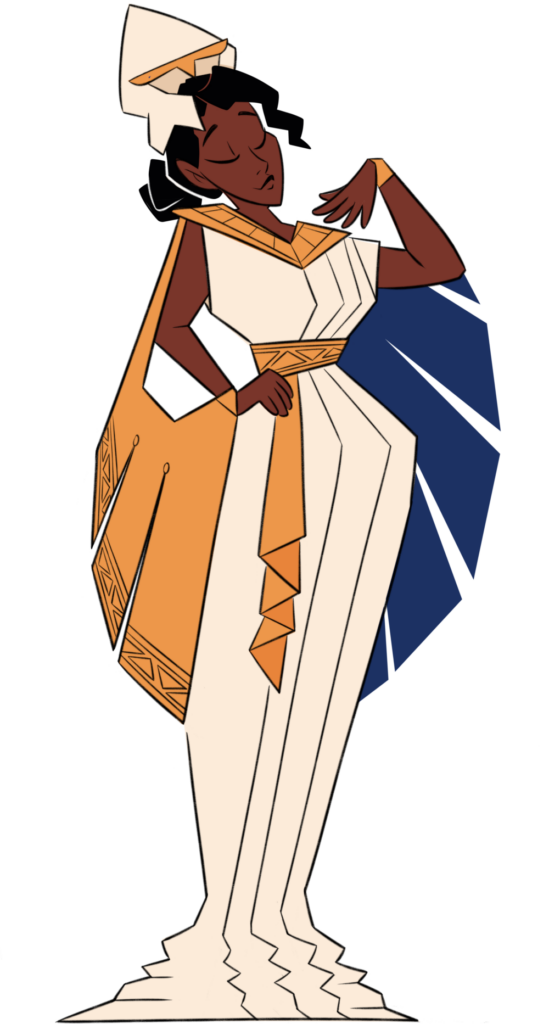
Sparta — Leonidas, the proud warrior
Sparta needs no long entry. The phalanx holds longest. As losses mount, Spartan dice replace your normal ones: one Spartan die per two losses, up to four. Hits count double. Bring fewer words. Bring more shields.
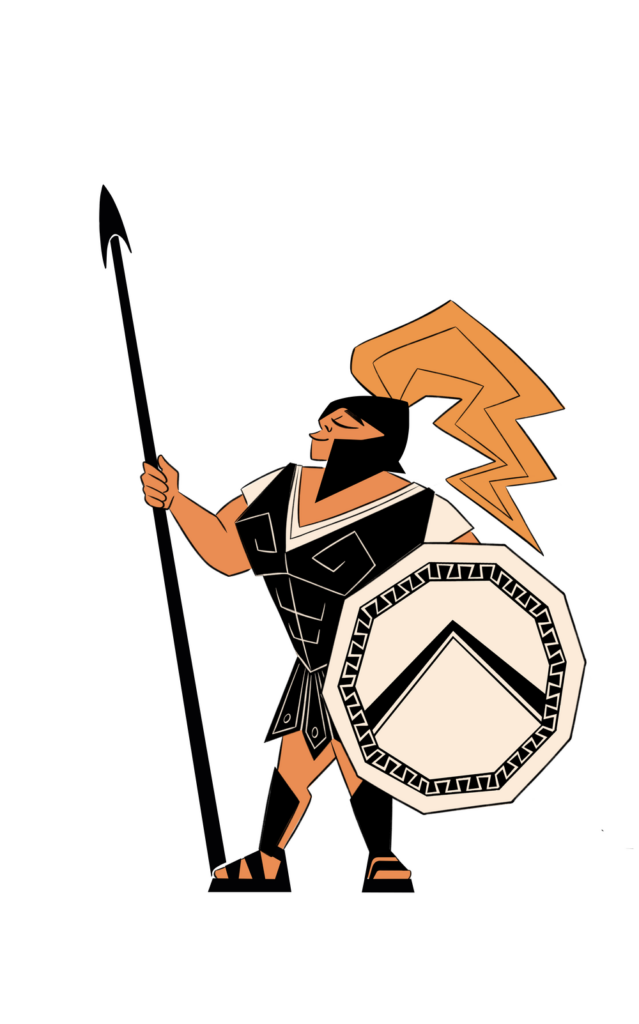
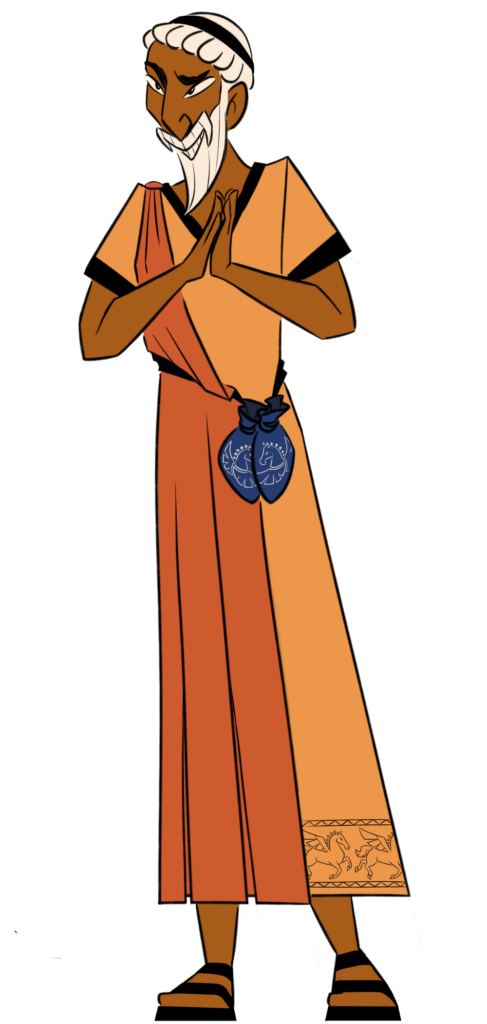
Corinth — Sisyphos, the cunning trader
Corinth hedges every bet. Trade routes, alliances, forts where the master builder winters — the chain grows stone by stone, so years turn into walls.
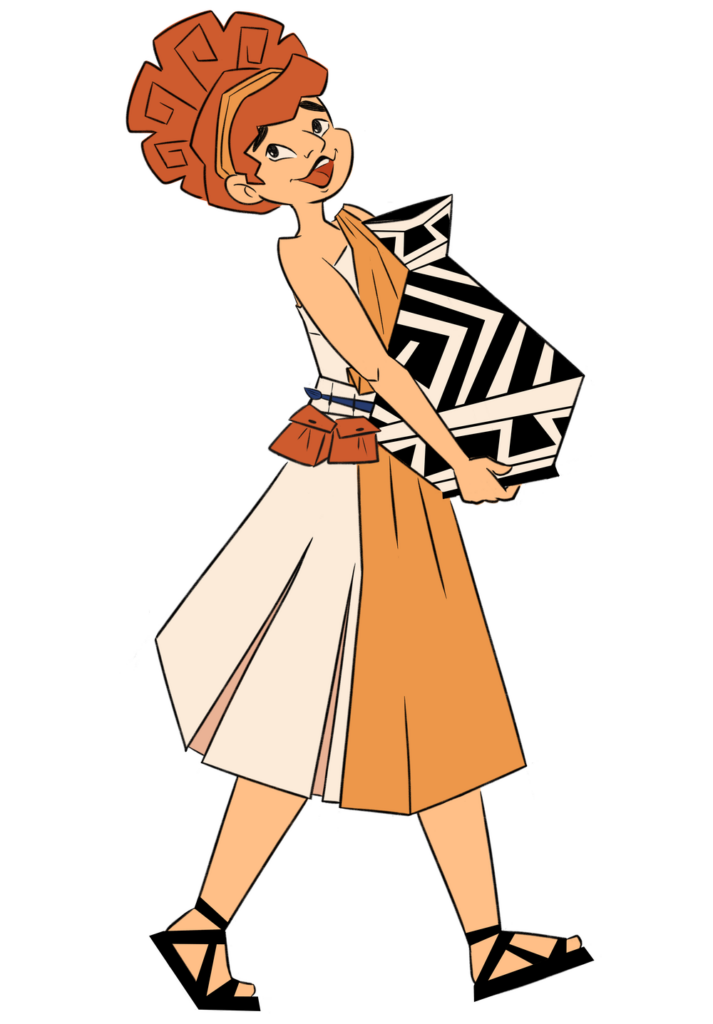
Thebes — Phix, the eager vase-painter
Thebes plans. Coins counted, the next stroke drawn in the workshop, an oblique phalanx held back — three times a game Phix shifts the momentum of one charge, so patient study pays out in one decisive blow.
About Admira Games
Hi, my name is Oliver and I’m the founder of Admira Games.
For many years, my dear friend Jonas and I have enjoyed brainstorming about board games as a hobby.
It began with the big Civilization video games we loved.
We kept asking why so few board games captured that grand-strategy feeling without becoming heavy and overloaded.
That was the gap we wanted to close.
Then, in 2020, the pandemic hit. There wasn’t much to do, and meeting up to play board games was barely possible.
I had an old Jean du Poël board game at home, ‘Mare Mediterraneum’. It had a similar grand-strategy ambition, but it played far too slowly for our taste.
I started redesigning it, and Jonas was immediately enthusiastic and joined in with plenty of sharp ideas.
We developed our own game — and the more we reworked it, the further it moved from that empire-building blueprint into something new.
In 2023, we founded Admira Games as a partnership. By the end of 2024, Jonas chose to step back. On 1 January 2025, I refounded Admira Games as a solo studio and continued the work.
From there, I reworked the game concept from the ground up and redesigned many of the game elements.
The result is Aegeapolis — a focused strategy game about the rival Greek city-states, with a rhythm all its own.
Cologne, Germany. admiragames.com
Contact us
If something here resonates, we’re glad to hear from you.
WANT A BIT MORE FORMALITY?
Send an e-mail
Credits
Game design: Oliver. Co-design (2023–2024): Jonas Küttner. Art and design: Julia Bender. The coin economy idea is hers.